
The Protocols of the Elders of Zion
Antisemitic forgery purporting a Jewish plot for world domination.

Wikimedia Commons · Public domain
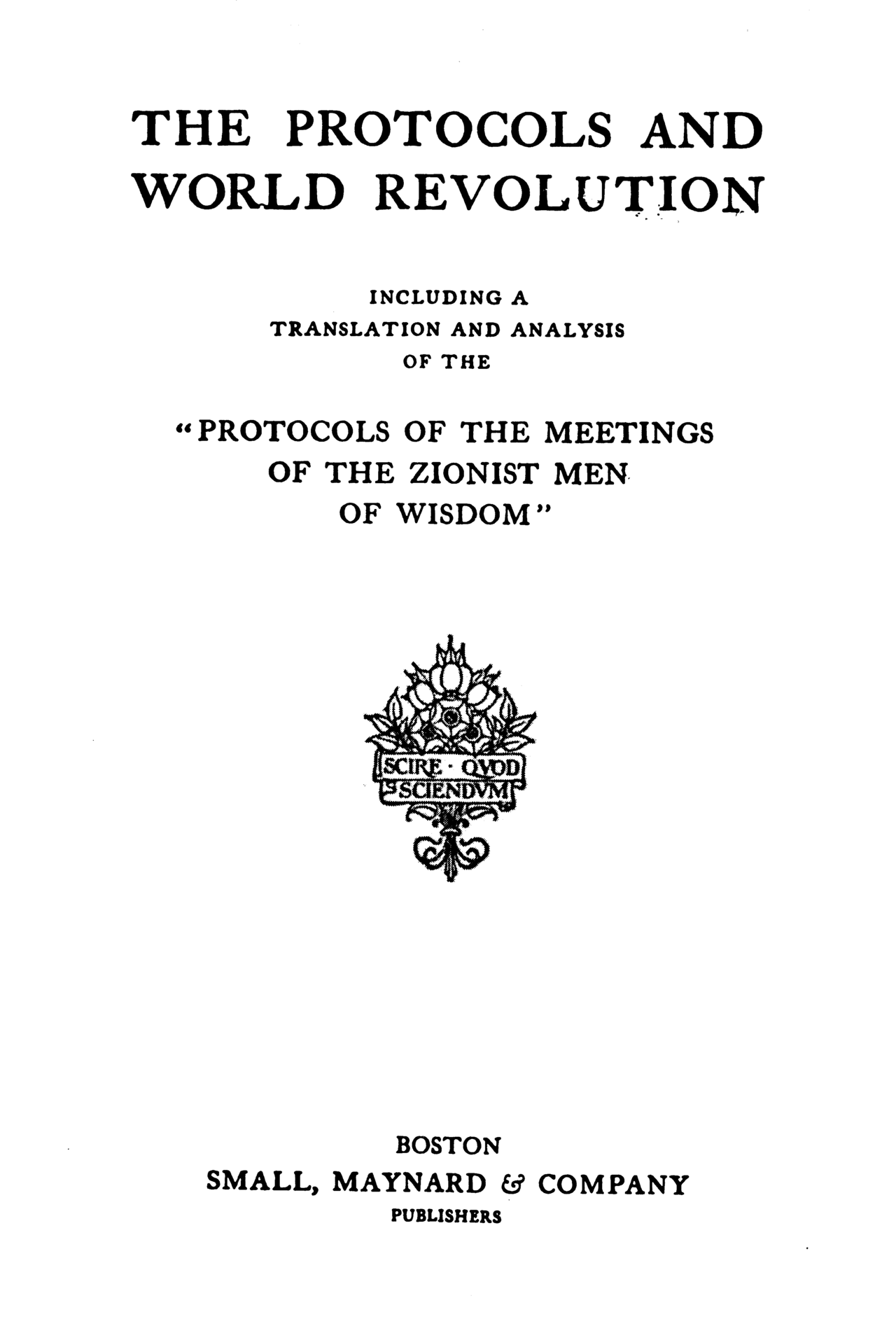
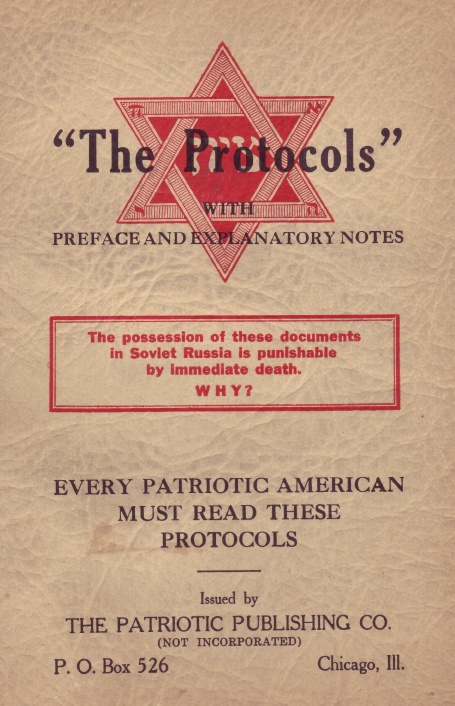
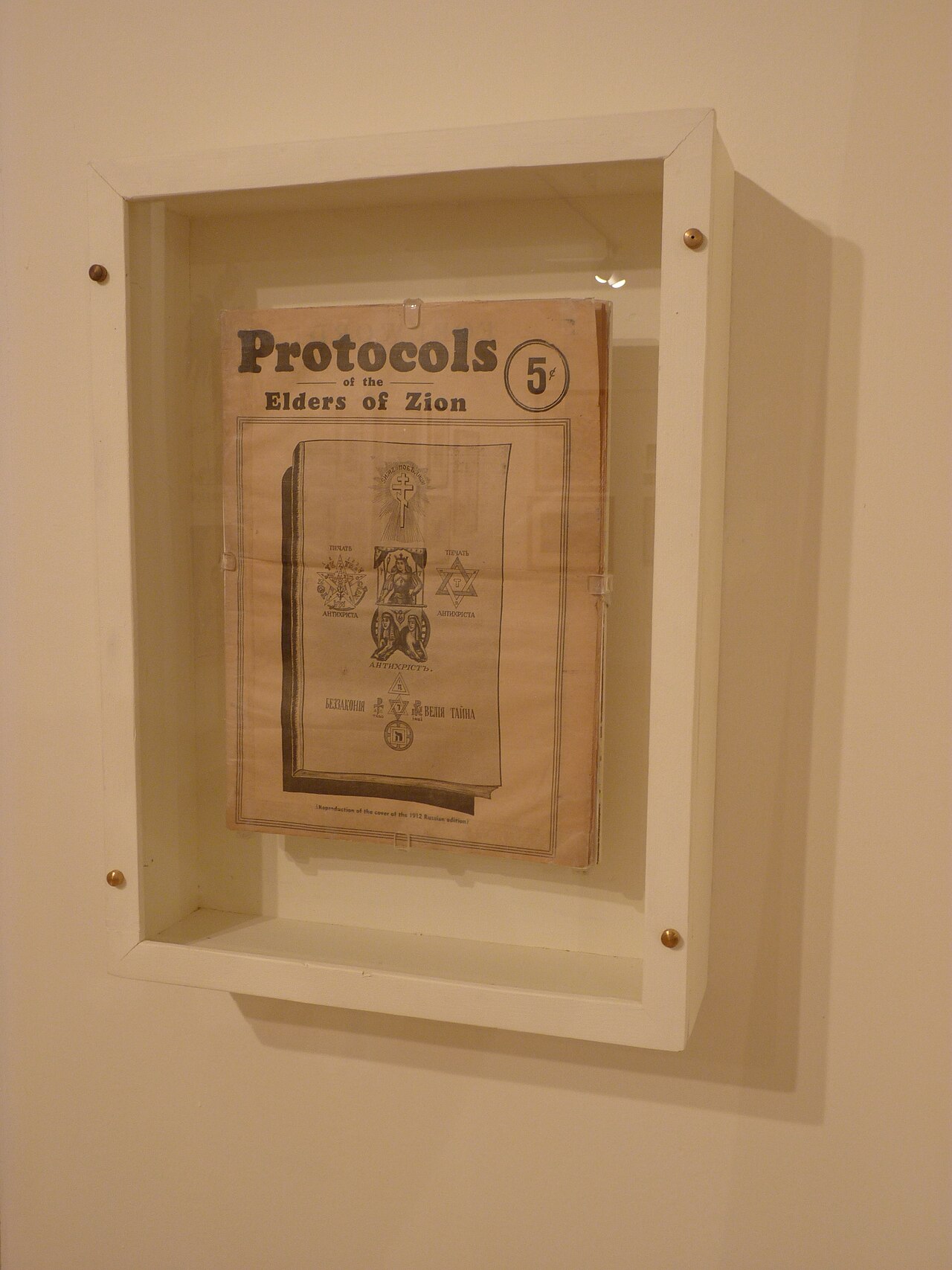
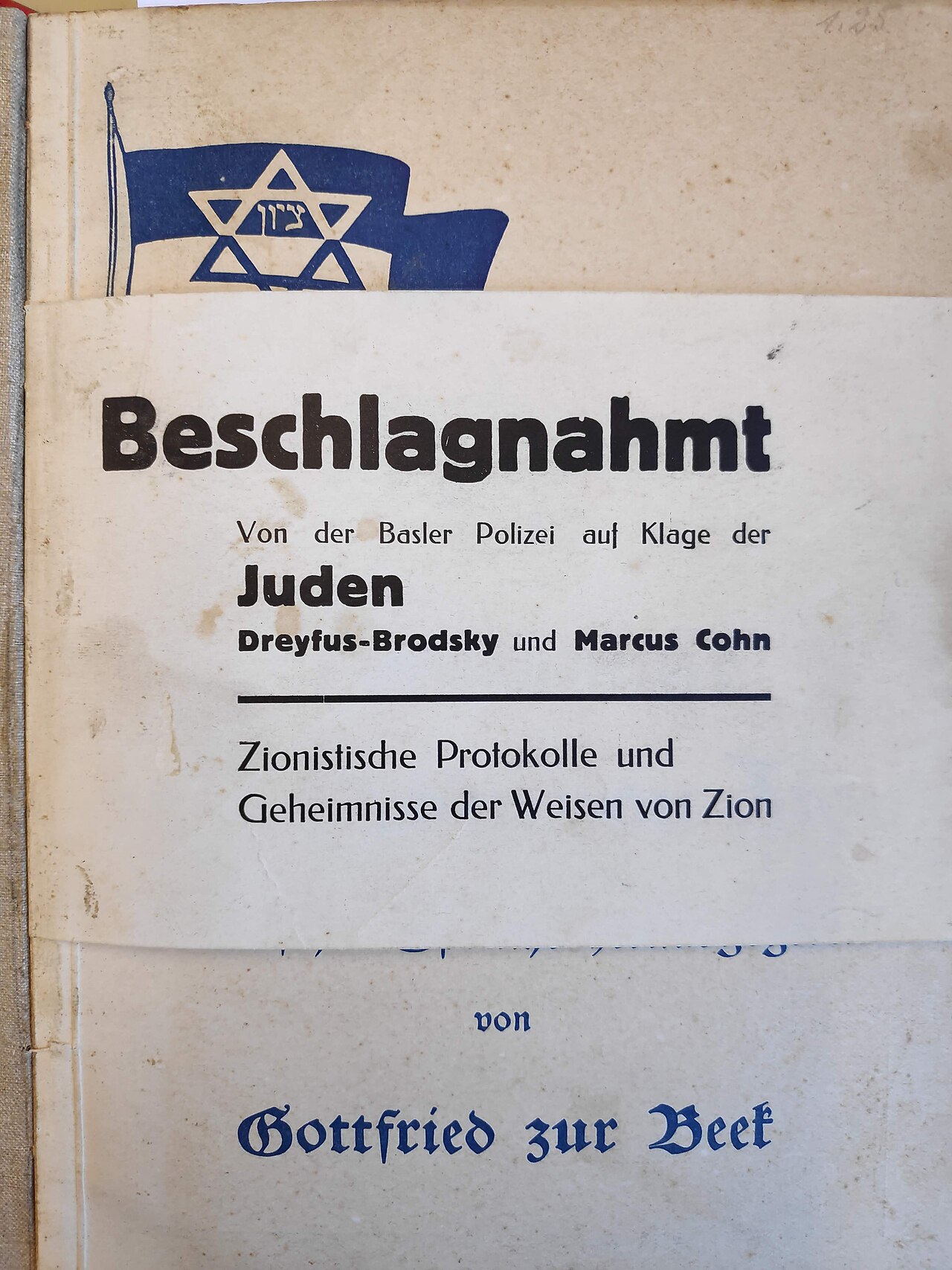
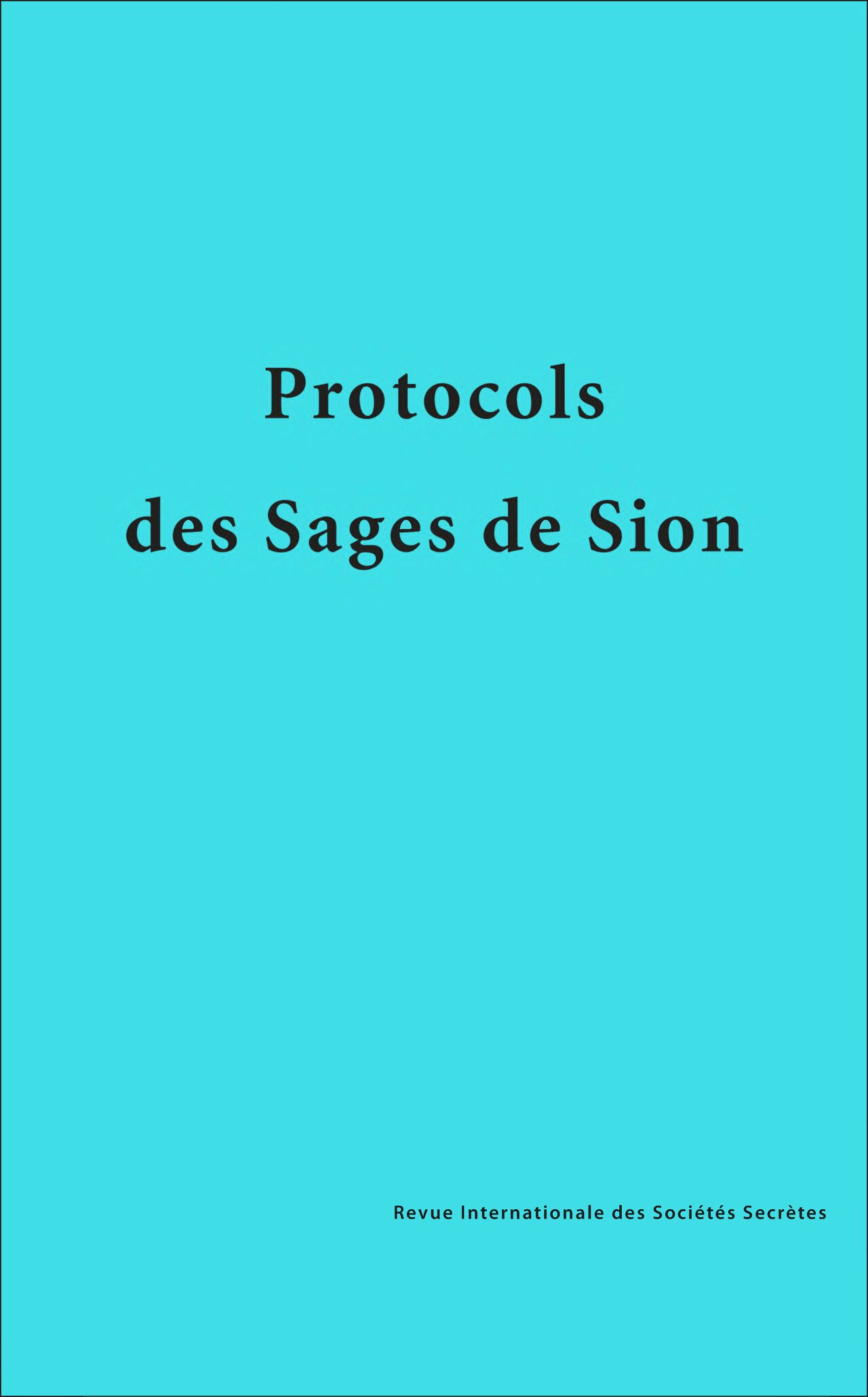
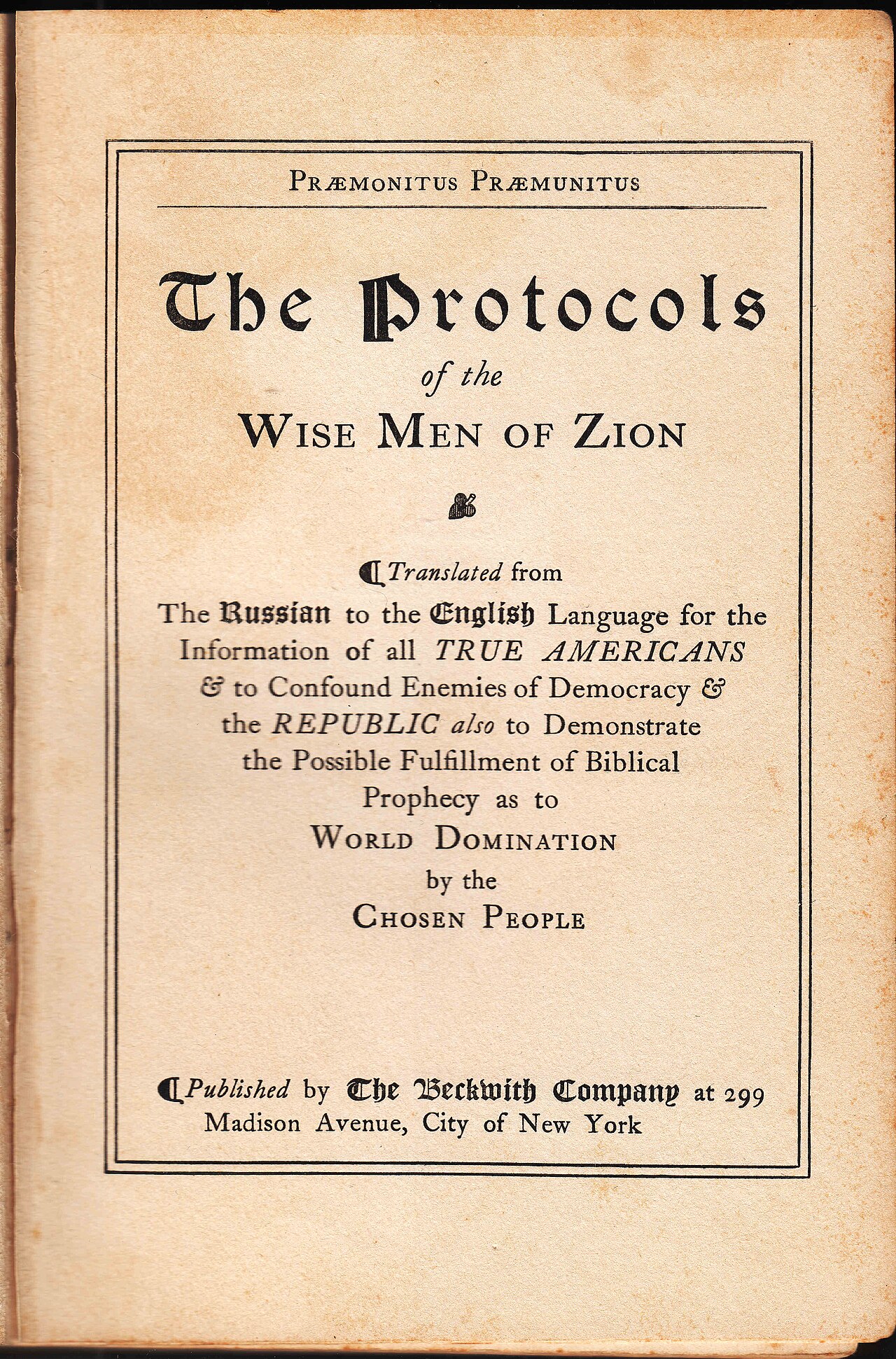
The Protocols of the Elders of Zion is an antisemitic hoax and forgery purporting to detail a Jewish plot for global domination. It played a key part in popularizing belief in an international Jewish conspiracy.
- type
- Forged document
- origin
- Imperial Russia
- known_for
- Antisemitic hoax and forgery
Lore & Background
The Protocols is a fabricated document purporting to be factual. Cesare G. Self-contradictions in various testimonies show that the individuals involved—including the text's initial publisher, Pavel Krushevan—deliberately obscured the origins of the text and lied about it in the decades afterwards.
Reader's Guide
The Protocols of the Elders of Zion is an antisemitic hoax and forgery that has been described as 'probably the most influential work of antisemitism ever written'. It remains widely available in numerous languages, in print and on the Internet, and continues to be presented by some antisemitic groups as a genuine document.
Fabrication and Plagiarism
The Protocols was not an authentic document but a deliberate fabrication. Scholar Cesare G. The individuals involved, including initial publisher Pavel Krushevan, later gave contradictory accounts and deliberately concealed the text's true origins.
The Russian Soil of Conspiracy
The forgery grew from deep roots in Russian imperial anti-Jewish sentiment. After the partitions of Poland, the Russian Empire absorbed the world's largest Jewish population, confining them to the Pale of Settlement where local affairs were managed through the qahal, a semi-autonomous Jewish governing body. Under Tsar Nicholas I's doctrine of Orthodoxy, Autocracy, and Nationality, non-Orthodox subjects were treated as subversives. Even assimilated Jews who converted to Orthodoxy, like composer Maximilian Steinberg, were distrusted as potential infiltrators. The specific idea of an international Jewish shadow government crystallized in the 1860s through Jacob Brafman, a Lithuanian Jew who, after a dispute with local qahal agents, converted to Russian Orthodoxy and published polemics claiming the qahal secretly operated as a global conspiratorial network under the Alliance Israélite Universelle in Paris. His works were translated into multiple languages and taken seriously by Russian officials in the 1880s.
Exposure and the Nazi Classroom
Despite its fabricated nature, the Protocols gained enormous international traction in the early twentieth century, translated into numerous languages and circulated widely. Yet the text's destructive power was far from over. This institutional endorsement within the school system gave the forgery an aura of legitimacy it had never possessed. These channels ensured the text reached broad audiences across Europe at precisely the moment political extremism was gaining momentum.
Enduring Influence and Continued Circulation
The Protocols has been characterized as probably the most influential antisemitic text ever produced, a designation that reflects its extraordinary longevity and reach. More than a century after its initial Russian publication, it remains readily accessible in print and across the internet in a wide array of languages. Various antisemitic organizations continue to present it as an authentic historical document, refusing to acknowledge its status as a plagiarized forgery. The text played a central role in embedding the narrative of an international Jewish conspiracy for world domination into popular consciousness, a narrative that transcended national borders and persisted well beyond the fall of the regimes that most aggressively promoted it. The deliberate concealment of its origins by those involved in its creation—including contradictory testimonies from figures like Krushevan—meant that even after its exposure, the question of its authenticity remained contested in certain circles. Its survival as a circulating text, rather than being relegated purely to the historical record, underscores how effectively it was woven into the fabric of modern antisemitic discourse.
Gallery
Frequently Asked Questions
What is The Protocols of the Elders of Zion?
It is a fabricated document produced in Imperial Russia that falsely presents a supposed Jewish conspiracy to seize global power. The text has been conclusively identified as an antisemitic forgery with no basis in reality.
Where and when did The Protocols of the Elders of Zion originate?
The document was assembled in early-20th-century Russia, most likely by agents of the Okhrana secret police. Investigators have traced large stretches of its text to earlier French political pamphlets and a satirical novel, confirming it was pieced together from existing non-Jewish sources.
What role did The Protocols of the Elders of Zion play in history?
It became one of the most widely circulated vehicles for antisemitic conspiracy thinking in the twentieth century. Governments and movements in multiple countries used it to justify discrimination, pogroms, and ultimately genocide against Jewish populations.
How was The Protocols of the Elders of Zion proven to be a forgery?
Legal and academic investigations, including a 1935 Leipzig court ruling, demonstrated that the text was largely plagiarized from a 1884 French political satire and other unrelated works. No independent evidence has ever supported any of the claims the document makes.
Why is The Protocols of the Elders of Zion still discussed in academic and public contexts?
It stands as a textbook case of how a single forged text can seed decades of real-world hatred and violence. Scholars of propaganda, political theory, and the history of antisemitism study it to understand how fabricated narratives gain traction and cause harm.
More in Philosophy & Theory 1-24
Spotted an error? Know more?
This is a living reference — every entry is fact-audited, and reader corrections feed straight into our audit queue. Suggest an edit · See this site's audit record